
The football world is already buzzing with anticipation for the 2026 FIFA World Cup, a tournament that promises to be unlike any other in history. With an expanded format featuring 48 teams for the first time, more nations than ever before will have the dream of lifting the trophy. The qualification process is a complex, continent-by-continent battle that has already begun in some regions, reshaping the path to glory for footballing giants and underdogs alike.
This massive expansion from 32 to 48 teams opens the door for new stories, unexpected heroes, and perhaps the most unpredictable World Cup we have ever seen. For fans following on Babu88, the journey to the United States, Canada, and Mexico is filled with drama, tactical battles, and pure sporting emotion.
The New Landscape: A 48-Team Spectacle
The decision to expand the World Cup represents a seismic shift in international football. Instead of the traditional 32 teams, the 2026 edition will accommodate 48 nations, divided into 12 groups of four teams each. The top two from each group, along with the eight best third-placed teams, will advance to a knockout stage that now includes a new round of 32.
This structural change means more matches, more drama, and significantly more opportunities for nations that have historically struggled to reach the global stage. The allocation of slots across confederations has been revised to reflect this expansion, creating a fascinating dynamic in every region.
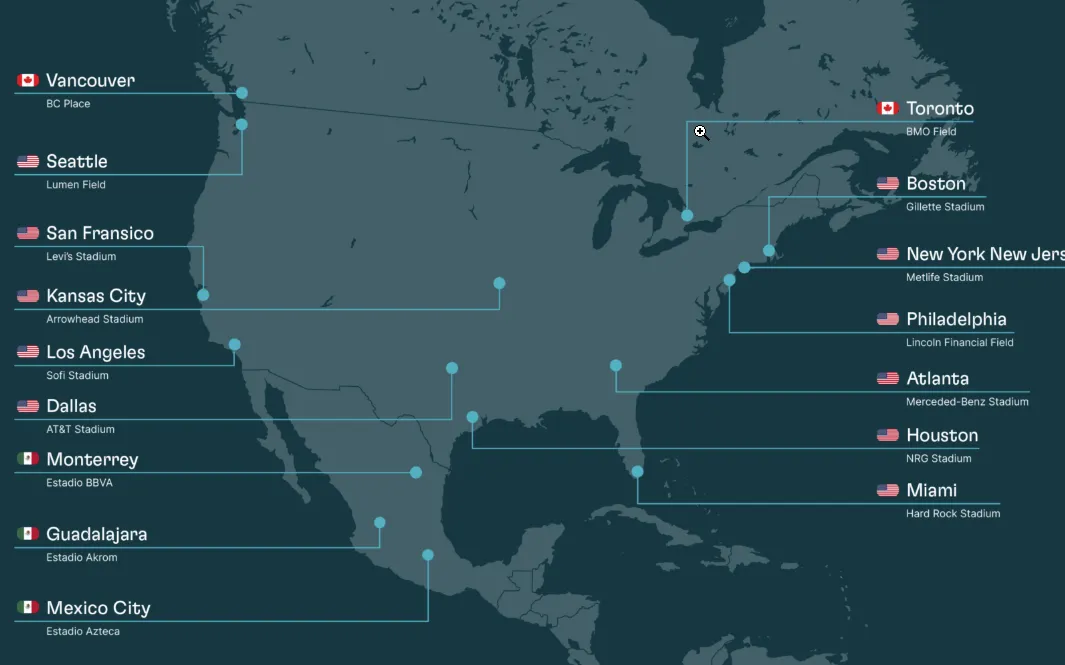
Slot Allocation Across Continents
The distribution of automatic qualification spots has been carefully calculated to balance competitiveness with geographic representation:
- AFC (Asia):8 direct slots (up from 4.5)
- CAF (Africa):9 direct slots (up from 5)
- CONCACAF (North/Central America & Caribbean):6 direct slots (up from 3.5, plus the three co-hosts)
- CONMEBOL (South America):6 direct slots (up from 4.5)
- OFC (Oceania):1 direct slot (up from 0.5)
- UEFA (Europe):16 direct slots (up from 13)
Additionally, two intercontinental playoff spots will be contested, bringing the total to the 46 automatic qualifiers plus the three co-hosts (USA, Canada, Mexico), though the hosts count among the CONCACAF slots.
CONMEBOL: The South American Marathon
South America’s qualification process is famously the most grueling in world football. With ten nations competing in a single round-robin league, every match is a battle. The expanded allocation means six direct spots, which has significantly reduced the pressure on traditional powers like Brazil and Argentina, while giving hope to nations like Venezuela, who have never qualified.
“This is a golden era for South American football,” explains Dr. Ricardo Mendez, a football historian based in Buenos Aires. “With six spots, the margin for error has grown. Teams like Ecuador, Colombia, and Uruguay can afford a few slip-ups, which makes the qualification campaign less about survival and more about development.”
The top six finishers will book their tickets directly to the World Cup, while the seventh-placed team enters the intercontinental playoff. This format rewards consistency over the course of 18 matchdays, testing the depth of each nation’s squad like no other confederation.
UEFA: European Giants Face Tighter Competition
Europe remains the powerhouse continent with 16 direct slots, but the qualification process has been redesigned to maintain competitive integrity. The 55 UEFA member nations are divided into 12 groups, with the group winners qualifying directly. The remaining four spots are determined through a playoff system involving the 12 group runners-up and the four best Nations League group winners who haven’t already qualified.
This dual-path system adds an extra layer of excitement. Teams that narrowly miss out on automatic qualification still have a lifeline through the playoffs. The Nations League connection ensures that performances across multiple seasons matter, rewarding consistent excellence.
“If you look at the UEFA qualification structure, it’s designed to minimize surprises,” notes tactical analyst Sarah Jenkins. “The playoff route gives second chances but also creates dramatic knockout moments. One bad game can cost you everything, even if you’ve been solid throughout the group stage.”
Traditional heavyweights like Germany, France, Spain, and England will be expected to qualify comfortably, but the expanded format means fewer European minnows will be squeezed out by the continent’s elite.
CAF: Africa’s Golden Opportunity
Perhaps no confederation benefits more from the expansion than Africa. With nine direct slots, the continent will have unprecedented representation. The CAF qualification process involves a preliminary round for lower-ranked teams, followed by nine groups of four or five teams, with each group winner qualifying directly.
This structure removes the traditional playoff round that often produced heartbreaking eliminations for African nations. Teams like Cameroon, Senegal, Nigeria, and Morocco will still be favorites, but nations like Cape Verde, Comoros, and Equatorial Guinea now have realistic paths to their first World Cup appearance.
“The expansion is a game-changer for African football,” says journalist Kwame Asante, who covers the continent’s leagues extensively. “Previously, we’d see talented teams miss out because of one bad result. Now, the depth of African football will be on full display. I expect to see at least three African teams reach the knockout stages in 2026.”
The qualification campaign also features several African nations hosting matches on home soil, creating vibrant atmospheres that could prove decisive in tight group battles.
AFC: Asia’s Rise Continues
Asia’s allocation has nearly doubled, rising to eight direct slots. This reflects the continent’s growing football infrastructure and competitiveness. The AFC qualification process begins with a first round for lower-ranked teams, followed by two group stages. The top 18 teams are divided into three groups of six, with the top two from each group qualifying directly.
The remaining two direct slots are contested through a fourth-round playoff, where the third- and fourth-placed teams from the initial three groups compete. This ensures that even teams finishing mid-table have a chance to qualify.
“Japan, South Korea, Saudi Arabia, and Iran are still the benchmarks, but the gap is closing,” observes Asian football expert Dr. Li Wei. “Teams like Australia, Uzbekistan, and even Vietnam have made tremendous progress. With eight slots, we’ll see a more diverse Asian representation that truly reflects the region’s growth.”
The intercontinental playoff spot adds another potential path for Asian teams, making this the most generous qualification window in the continent’s history.
CONCACAF: Hosts and Ambition
The North American region benefits from having three co-hosts, but beyond that, six direct slots are available for the remaining nations. The qualification process involves a preliminary round and a final hexagonal stage, where the top three teams qualify directly, while the fourth-place team enters the intercontinental playoff.
The United States, Canada, and Mexico are already guaranteed spots as hosts, meaning some of the region’s strongest teams will be competing for the remaining six slots. This creates an unusual dynamic where nations like Costa Rica, Jamaica, and Honduras have a clearer path to qualification than in previous cycles.
“The hosts being pre-qualified changes everything for CONCACAF,” explains regional specialist Carlos Rivera. “Teams that usually fought for third or fourth place are now competing for even more spots. It’s a massive opportunity for smaller nations to make history.”
OFC: Oceania’s Moment in the Sun
For the first time, Oceania will have a guaranteed direct slot in the World Cup. This is a historic development for the confederation, which has traditionally sent its winner to the intercontinental playoff. Now, the winner of the OFC Nations Cup, serving as the qualification tournament, will secure an automatic berth.
New Zealand remains the dominant force, but nations like Papua New Guinea, Solomon Islands, and Fiji have genuine hopes of breaking through. The expanded format gives these Pacific Island nations a realistic target and has already sparked increased investment in football infrastructure across the region.
“This is the biggest day in Oceania football history,” declares former New Zealand international Ryan Thompson. “The direct slot means our best players will no longer be discouraged by the daunting playoff path. We can now dream of regular World Cup appearances.”
The Intercontinental Playoffs: Last Chance Drama
Two spots remain for the intercontinental playoffs, featuring one team from each confederation except UEFA. The playoff involves:
- One team from AFC
- One team from CAF
- One team from CONCACAF
- One team from CONMEBOL
- One team from OFC
The five teams will compete in a mini-tournament, with the two winners advancing to the World Cup. This playoff represents the ultimate high-stakes drama, where 90 minutes can decide a nation’s footballing destiny.
Qualifying Timeline and Key Dates
The qualification process unfolds across multiple windows between 2023 and 2025. Key milestones include:
- AFC:Third round concluding in June 2025
- CAF:Group stage finishing in November 2025
- CONCACAF:Final hexagonal concluding in September 2025
- CONMEBOL:Marathon concluding in September 2025
- OFC:Nations Cup determining the qualifier in early 2025
- UEFA:Group stage concluding in November 2025, playoffs in March 2026
The intercontinental playoffs will be held in a centralized location in early 2026, setting the stage for the final World Cup draw.
Implications for the Tournament
The expanded format will fundamentally alter the World Cup experience. With 48 teams, the group stage will feature more varied matchups, potentially reducing the number of “dead rubber” matches. The addition of a round of 32 means every match carries weight, as teams compete not just for group victories but for favorable knockout positioning.
For fans following the qualification journey on Babu88, the expanded tournament promises more storylines, more upsets, and a truly global celebration of football. The 2026 World Cup will not just be about which team wins, but about the diverse paths that brought 48 nations to the biggest stage in sports.
As the qualification battles intensify, one thing is certain: the road to the 2026 World Cup is the most inclusive, competitive, and unpredictable in history. Babu88 will be there every step of the way, bringing you the latest updates, expert analysis, and the passion that makes football the world’s game. Share your predictions in the comments below and let us know which underdog you’re backing to make history in 2026!
