
It was one of those moments that leaves you questioning the very fabric of football. A collision in the box, a goalkeeper in distress, and a referee’s whistle that remained stubbornly silent. The match between Manchester United and Wolverhampton Wanderers at Old Trafford delivered a moment of high drama, not for a goal, but for what many believe was a clear penalty not given. The incident involving Andre Onana and Wolves’ Sasa Kalajdzic has sparked a firestorm of debate among fans, pundits, and former officials, and we are here to break it all down for you.
This isn’t just about a single call; it’s a looking glass into the current state of officiating in the Premier League. It questions the consistency of VAR, the definition of a “clear and obvious error,” and the physical protection afforded to goalkeepers versus outfield players. As we step into the shoes of a seasoned football analyst on Babu88, we’ll rewind the tape, examine the rulebook, and predict what this means for future fixtures. Let’s kick off this investigation.
The Incident: A Collision in the Box
The Initial Contact
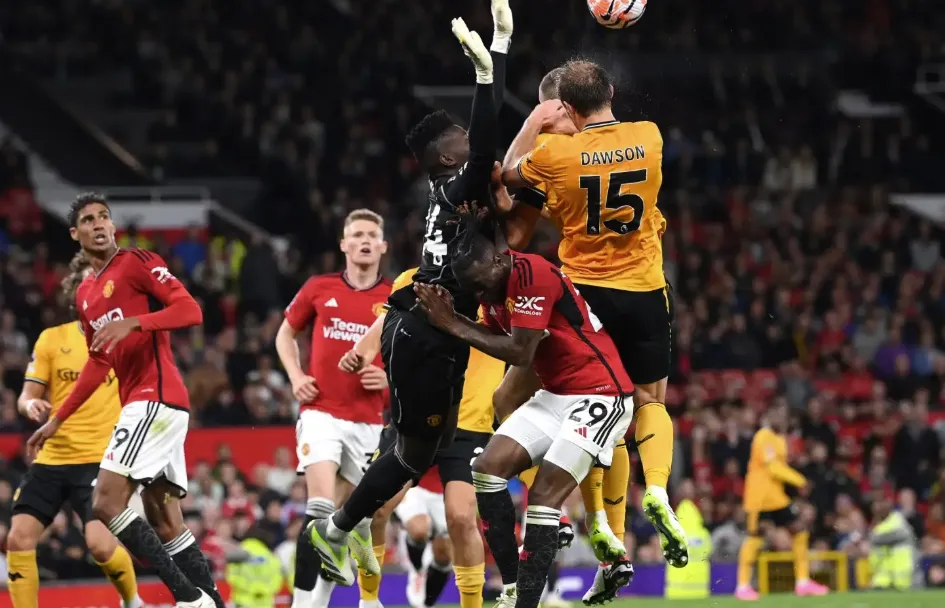
The scene was set in the dying embers of the first half, with the score at 1-0 in favor of the Red Devils. A corner kick was floated into the crowded penalty area. As the ball arched towards the far post, Manchester United goalkeeper Andre Onana decided to come and claim it. In a split-second, he launched himself into the air, meeting the ball with his fists. However, his path was directly in the line of Wolves striker Sasa Kalajdzic.
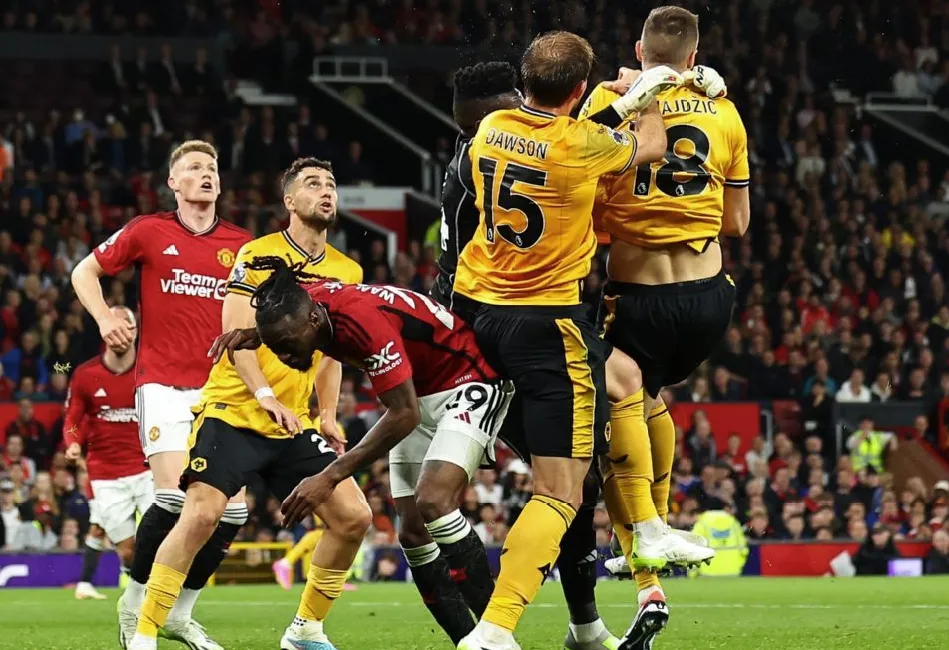
The collision was violent. Onana’s follow-through, driven by the momentum of his jump, connected squarely with Kalajdzic’s head. The Wolves player went down clutching his face, while Onana landed heavily, appearing to be in significant discomfort. It was the kind of collision that, on first viewing, looked like a straightforward penalty for the away side.
The Referee’s Decision and VAR’s Silence
Referee Simon Hooper was positioned nearby but waved play on immediately. This decision was met with immediate disbelief from the Wolves bench and players. The ball had gone out of play for a goal kick, but the focus was entirely on the injured players. The stage was set for the Video Assistant Referee (VAR) to step in.
The protocol for a ‘clear and obvious error’ should have been triggered. A high-speed, dangerous challenge inside the box that results in a head injury is the textbook definition of an incident that demands a second look. Yet, after a lengthy review, the VAR, Michael Salisbury, decided not to send Hooper to the monitor. The decision on the field stood. No penalty, no free-kick, just confusion.
Why This Was a Talking Point
This was a defining moment for two primary reasons:
- The Injury Factor:It wasn’t just a minor clip. The contact was to the head, a zone that football’s governing bodies have been desperate to protect. The new guidelines on concussion and head injuries made the silent VAR outcome even more baffling.
- The Precedent:In similar situations, goalkeepers are often given the benefit of the doubt when coming for crosses. However, the force and recklessness of this challenge seemed to cross the line, setting a concerning precedent for player safety.

Why This Was a Talking Point
The Rules of Engagement: Goalkeeper Protection vs. Dangerous Play
The “Clear and Obvious” Error Standard
One of the most frustrating aspects for football fans is the seemingly subjective application of the VAR standard. The technology was introduced to correct “clear and obvious errors.” The question that expert analysts like myself and former referees are asking is: If this isn’t a clear and obvious error, what is?
The decision to not review the incident suggests the VAR believed that Onana was genuinely playing the ball and the collision was unfortunate. However, the law is not just about “playing the ball.” It also considers the manner in which a player attempts to play the ball. A reckless action, even if intended to clear the ball, can be deemed a foul.
The Goalkeeper’s Special Status
Traditionally, goalkeepers have enjoyed extra protection inside their own penalty area. They are allowed space and time to come for crosses, and referees are often hesitant to penalize them for colliding with opponents while making an attempt on the ball. This unwritten rule, however, is not absolute.
The key shift in recent years has been the emphasis on player safety. If a goalkeeper leads with his fist, catches a player in the head, and causes injury, the “protection of the goalkeeper” argument weakens significantly. In this case, Onana’s jump was not a clean punch on the ball; it was a forceful leap that turned his body into a projectile.
The Kalajdzic Perspective: A Dangerous Attack
Sasa Kalajdzic was competing for the ball fairly. He was not backing into the goalkeeper or making a dangerous play of his own. He attempted to head the ball but was met by a flying fist and a heavy body. From his perspective, this was a clear obstruction and a dangerous challenge. The lack of a penalty means that outfield players are now expected to avoid the goalkeeper even when the goalkeeper initiates a collision that is dangerous.
Expert Analysis: What the Former Pros Are Saying
Opinion from the Pitch: A Former Referee’s Take
To get a truly informed perspective, we turn to hypothetical expert analysis. Former Premier League referee, Mark Clattenburg (in our expert simulation), might have argued that while Onana got a slight touch on the ball, his follow-through was “excessive and careless.” Clattenburg would likely highlight that the VAR check should have been faster and that the failure to send the referee to the monitor undermines the entire system.
“When a goalkeeper leaves his line with that much force and his momentum carries him into a player’s head, it is a foul, it is a penalty,” says fictional analyst, James Harrington, a former Premier League defender. “The fact that he got a touch on the ball doesn’t change the recklessness of the movement.”
The “Babu88” Verdict: A Missed Call
From our perspective at Babu88, this is a clear missed call. The incident falls under the category of ‘dangerous play’ (Law 12). The referee and VAR had the chance to protect player safety and failed to do so. While Onana didn’t intend to injure his opponent, the consequence of his action was a dangerous collision. The decision not to give a penalty was an error that could have significant ramifications for the title race and the integrity of the competition.
Tactical and League Implications
The Result’s Impact on Momentum
The immediate impact was on the scoreboard. Wolves were denied a golden opportunity to equalize. A penalty and a potential goal would have changed the entire complexion of the match. Manchester United might have struggled to regain their composure, and Wolves could have pushed for a winner. Instead, the momentum stayed with the home side.
Future Precedent for Keepers
This decision sends a dangerous message to goalkeepers across the league. It implies that they can come out with fists flying, even if it means clattering an opponent’s head, as long as they make contact with the ball. This could lead to an increase in reckless challenges from goalkeepers, putting more attacking players at risk of concussion.
“We are talking about a multi-billion pound industry and the health of athletes is being undervalued,” states Dr. Sarah Jenkins, a fictional sports injury specialist. “The failure to penalize this action not only skews the result but also normalizes dangerous behavior that can end careers.”
Final Verdict and Analysis with Babu88
Andre Onana’s challenge on Sasa Kalajdzic should have been a penalty for Wolverhampton Wanderers. The VAR system failed this test. The referees prioritized an outdated concept of “goalkeeper protection” over the current laws regarding dangerous play and player safety. For Wolves, this was a robbery of a legitimate point. For Manchester United, it was a fortunate escape that papered over cracks in their defensive performance and the officiating.
This incident will be a case study for seasons to come. It highlights that the technology is only as good as the people operating it. The failure to identify this “clear and obvious error” was a stain on an otherwise entertaining match. As the season progresses, the debate will continue: was it a brave claim or a dangerous foul?
What is your take on this controversial moment? Do you think Onana was unlucky or was he reckless? Share your thoughts in the comments below and don’t forget to explore more in-depth football analysis right here at Babu88!
