
In a candid revelation that has sent shockwaves through the football world, Manchester United manager Erik ten Hag has openly admitted that the signing of Jadon Sancho was a mistake. This unexpected acknowledgment from the Dutch tactician has sparked intense debate among fans and pundits alike, raising questions about the club’s transfer strategy and the direction of one of football’s most storied institutions. As the Red Devils continue to navigate a challenging season, this confession from the Old Trafford dugout marks a pivotal moment in understanding the complexities behind the scenes at Babu88.
The admission, which came during a recent press conference, has reignited discussions about Manchester United’s recruitment policies over the past few years. Sancho, who arrived from Borussia Dortmund in July 2021 for a fee reported to be around £73 million, was once considered one of the most promising young talents in European football. However, his time at Old Trafford has been marred by inconsistent performances, reported disciplinary issues, and a high-profile falling out with the manager that led to a temporary exile from the first team.
The Background of a Troubled Transfer
Why Sancho Was Expected to Shine at Old Trafford
When Jadon Sancho made the move from Dortmund to Manchester, expectations were sky-high. The young winger had established himself as one of the Bundesliga’s most electrifying performers, racking up an impressive tally of goals and assists while showcasing a flair for creativity that seemed perfectly suited to the Premier League. His ability to drift past defenders with ease, combined with his vision and composure in front of goal, made him a dream acquisition for a United side desperately in need of attacking inspiration.
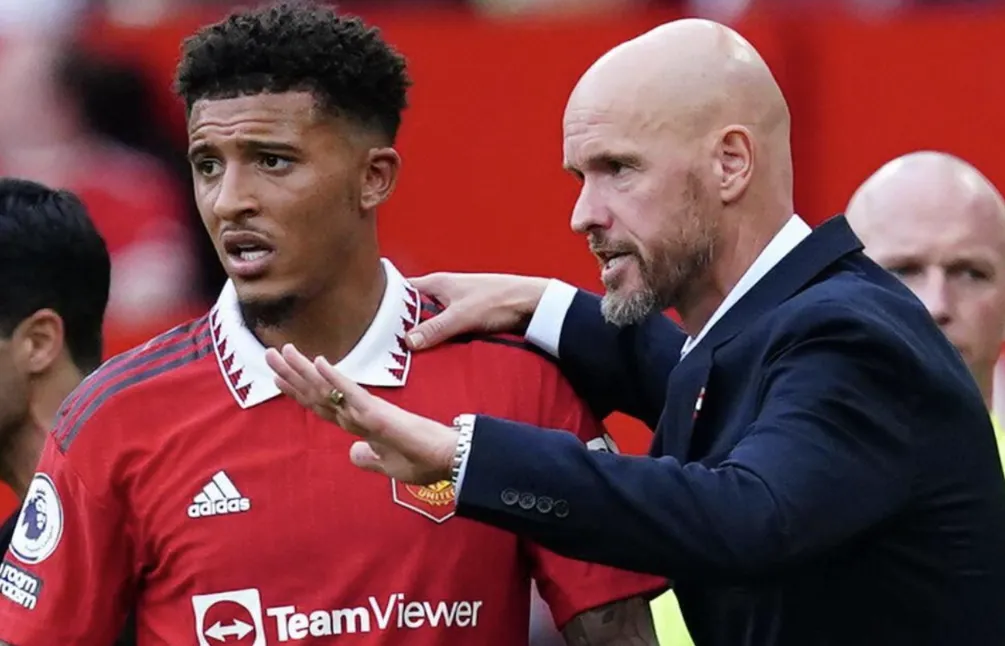
However, the transition from German football to the English top flight proved far more challenging than anticipated. Sancho‘s first season at United was largely underwhelming, with the winger managing just three goals and three assists in 29 league appearances. While there were glimpses of his undeniable talent, consistency remained elusive, and the player often looked a shadow of the dynamic force that had terrorized Bundesliga defenses.
The Fractured Relationship with Erik ten Hag
The arrival of Erik ten Hag in the summer of 2022 was supposed to be the catalyst for Sancho’s resurgence. The Dutch manager had a reputation for developing young talent and implementing an attacking brand of football that seemed tailor-made for a player of Sancho’s skillset. Yet, things quickly soured between the two men.
Reports began to surface about disagreements over training methods and tactical expectations. The situation came to a head in September 2023 when ten Hag publicly criticized Sancho’s training performances, leading to a very public social media response from the player claiming he had been made a “scapegoat.” The fallout was immediate and severe: Sancho was banished from the first team and forced to train separately from his teammates.
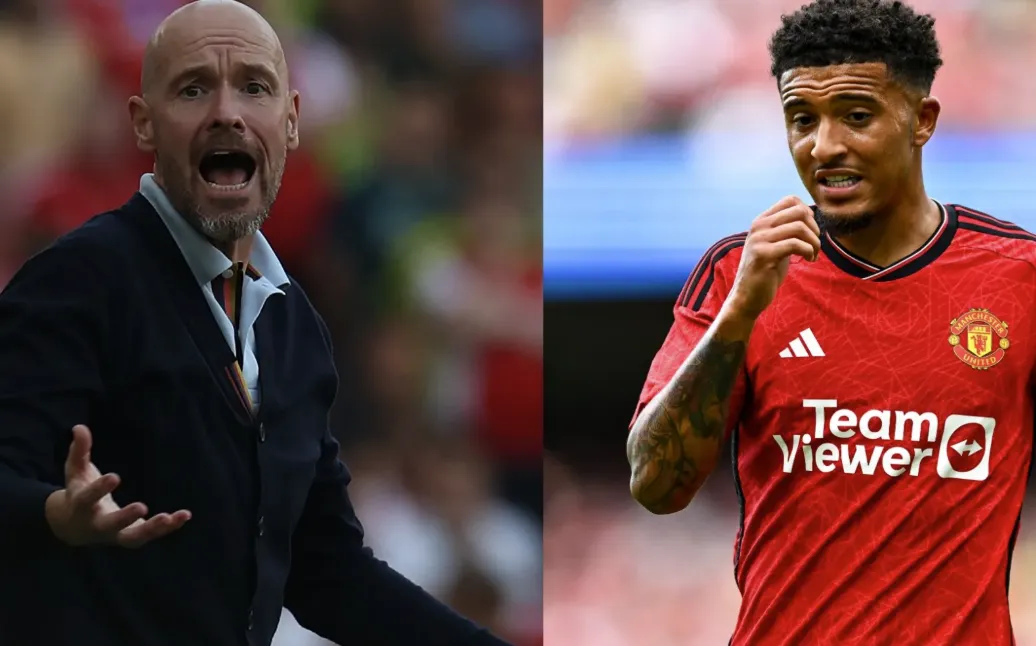
According to football analyst Marcus Whitfield, a former Premier League scout, the breakdown was predictable. “When you look at the dynamic between ten Hag and Sancho, it was always going to be a clash of personalities,” Whitfield explains. “Ten Hag demands absolute discipline and adherence to his tactical system. Sancho, for all his talent, thrives on freedom and instinct. That combination was always going to create friction unless one of them was willing to adapt, and neither was.”
The Admission That Changes the Narrative
Ten Hag’s Candid Confession
During a recent press conference ahead of United’s crucial Premier League fixture, ten Hag was asked directly about the Sancho situation. His response caught everyone off guard. “Looking back, I think we all made a mistake with that signing,” ten Hag stated, according to multiple sources present at the briefing. “The player has talent, there is no question about that. But sometimes, the fit between a player, a club, and a manager is just not right. We tried to make it work, but it became clear that it wasn’t going to happen.”
This admission is significant for several reasons. Firstly, it represents a rare moment of public accountability from a manager who has often been criticized for being overly defensive about his decisions. Secondly, it acknowledges that the recruitment process itself was flawed, pointing to deeper issues within the club’s transfer infrastructure.
The Financial Implications of a Failed Transfer
The financial impact of the Sancho saga cannot be overstated. With the player currently on loan at Borussia Dortmund, Manchester United are still paying a significant portion of his wages while receiving only a fraction of his value in return. The initial investment of £73 million, combined with the player’s substantial weekly salary, represents one of the most expensive mistakes in recent Premier League history.
Transfer expert Sarah Chen, who specializes in football finance analysis, breaks down the numbers. “When you factor in the transfer fee, wages paid over the course of his contract, and the depreciation of his market value, Manchester United are looking at a total cost of well over £100 million for a player who has failed to deliver consistently. That’s a staggering amount of money for any club, but for United, who have been criticized for poor recruitment, it’s a particularly painful pill to swallow.”
What Went Wrong? Analyzing the Sancho Experiment
Tactical Mismatch and System Limitations
One of the fundamental issues with Sancho‘s time at United was the tactical system under both Ole Gunnar Solskjær and Erik ten Hag. At Dortmund, Sancho operated in a fluid attacking setup that allowed him to drift between positions, combine with overlapping full-backs, and exploit spaces in the final third. The Bundesliga’s more open style of play suited his game perfectly, giving him the time and space to make decisions.
In contrast, the Premier League is far more physically demanding and tactically disciplined. Defenders close down space quickly, and there is less time on the ball. Ten Hag’s system, which prioritizes structured possession and rigid positional discipline, further constrained Sancho’s natural instincts. The winger often looked uncomfortable when asked to track back defensively or hold his position on the touchline, preferring instead to roam centrally where he could influence play.
Psychological and Cultural Factors
Beyond the tactical considerations, there were significant psychological and cultural factors at play. Sancho, who left England as a teenager to develop his game in Germany, had built his confidence and playing style in a different footballing environment. Returning to the intense scrutiny of English football, particularly at a club as demanding as Manchester United, proved to be a pressure cooker that he struggled to handle.
“The mental aspect of playing for Manchester United cannot be underestimated,” explains sports psychologist Dr. James Harrington, who has worked with professional footballers. “The weight of expectation, the constant media attention, and the demands of the fans create an environment where even the most talented players can struggle. For a player like Sancho, who thrives on confidence and freedom, the rigid structure and intense scrutiny at United may have been counterproductive to his development.”
The Future for Sancho and Manchester United
What’s Next for Jadon Sancho?
With his loan spell at Dortmund set to expire, the immediate future for Jadon Sancho remains uncertain. Reports from Germany suggest that the player has rediscovered some of his form during his return to the Bundesliga, showing flashes of the talent that made him such a sought-after prospect. However, a permanent return to Dortmund seems unlikely given the financial constraints on both clubs.
Several European clubs have been linked with a potential move for Sancho, including Juventus and Borussia Dortmund’s rivals, Bayern Munich. However, any transfer would require Manchester United to accept a significant loss on their initial investment. The club may be forced to subsidize wages or accept a loan with an option to buy, further compounding the financial damage of the failed experiment.
Lessons for Manchester United’s Transfer Strategy
The Sancho saga serves as a cautionary tale for Manchester United and their recruitment strategy. The club has been criticized for years for making expensive signings that fail to deliver, from Angel Di María to Alexis Sánchez to Paul Pogba. The common thread in many of these failures appears to be a lack of due diligence regarding how a player’s style and personality will fit within the club’s culture and tactical system.
“United need to fundamentally rethink how they approach transfers,” argues former Manchester United scout Mick Brown, who spent over a decade identifying talent for the club. “It’s not enough to just sign the most talented player available. You have to ask: Will this player fit into our system? Will they handle the pressure? Do they have the right mentality? The answer to those questions should determine whether you make a move, not just the player’s reputation or marketability.”
Conclusion: A Turning Point for Manchester United
Erik ten Hag’s admission that the Jadon Sancho signing was a mistake represents more than just a moment of honesty from a manager under pressure. It signals a potential shift in how Manchester United approach their recruitment and squad management going forward. By publicly acknowledging the error, ten Hag has opened the door for a more honest assessment of the club’s transfer failures and the systemic issues that contribute to them.
For fans of Babu88 and Manchester United supporters worldwide, this moment should serve as a call for greater accountability and more strategic thinking in the transfer market. The days of splashing huge fees on marquee signings without proper consideration for fit and character must come to an end if the club hopes to return to the summit of English and European football.
What do you think about Erik ten Hag’s admission? Do you believe Jadon Sancho can still fulfill his potential at another club, or is his best football behind him? Share your thoughts in the comments below, and don’t forget to explore more of our in-depth football analysis and transfer coverage on our website. Your voice matters in this ongoing conversation about the future of one of football’s greatest institutions.
